Apple Breaks 15-Year Streak With New Touchscreen MacBook Pro
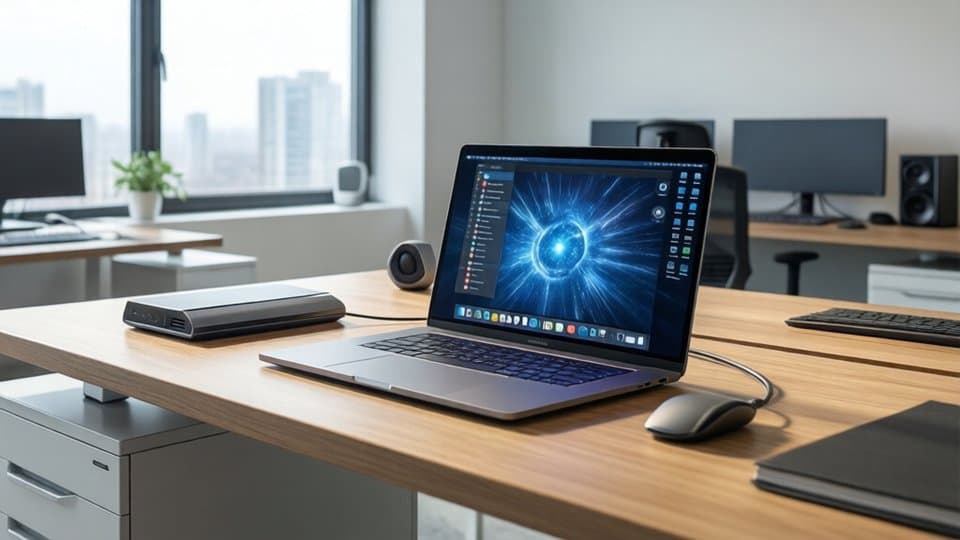
Apple announced a new touchscreen MacBook Pro yesterday, ending a 15-year resistance to adding touch capabilities to its laptop lineup. This shift affects professional users and creators who have long demanded touch integration for their workflows. If you are a pro user, you can now order the new model with an OLED touchscreen.
- Apple CEO John Ternus stated, “You’ve gotta touch it to believe it,” during the announcement.
- The new MacBook Pro starts at a price of $2,899, according to The Verge.
- Apple's marketing chief Greg Joswiak noted that young creators now expect touch functionality on their devices.
Why did Apple wait so long to add touch?
Apple avoided touchscreen laptops for over a decade because of specific ergonomic concerns raised by previous leadership. Steve Jobs argued in 2010 that touch surfaces are not suited for vertical use. He claimed that using a touchscreen laptop for long periods would make "your arm want to fall off," according to The Verge.
Tim Cook also expressed skepticism about combining different device types. In 2012, Cook suggested that forcing devices to converge is not always beneficial for the user. He compared the idea to trying to combine a toaster and a refrigerator, which he believed would not be pleasing to the user. This philosophy guided the company for years while competitors like Microsoft expanded their Surface line.
How does the new touchscreen MacBook Pro work?
The new device features an OLED touchscreen designed to handle finger gestures rather than stylus input. Unlike the iPad, this MacBook Pro has no Apple Pencil support. Users will rely on pinching to zoom, swiping between pages, and accessing the Notification Center through touch. This approach focuses on finger-based interaction for tasks like navigating maps or photos.
Software changes support this new hardware. The menu bar expands to make items easier to select with a finger. Additionally, the "traffic-light" buttons used to close or minimize windows grow larger when a user attempts to touch them. Apple also brought the Dynamic Island to the Mac. This feature, which first appeared on the iPhone 14 Pro, allows users to tap for quick controls and view volume or brightness changes.
Who is this new laptop for?
The MacBook Pro is primarily marketed toward graphic designers and young creators. Greg Joswiak told Wired that there is a generation of users who expect touch functionality. However, the high entry price may limit who can actually buy it. The base model starts at $2,899, which is nearly $1,000 more than the standard MacBook Pro.
High-end users can opt for massive configurations. According to Root Nation, the machine can be configured with up to 128 GB of memory and 16 TB of storage. This makes it a specialized tool for those with significant budgets. While it targets professionals, the lack of stylus support means it is not a direct replacement for an iPad in a drawing workflow.
What hardware changes did Apple make?
Apple addressed the physical challenges of a touchscreen laptop by redesigning the screen hinge. The company told Wired that the new hinge is intended to stabilize the display and prevent the wobble often associated with touchscreens. While the design looks sturdy, some early demonstrations showed that some screen movement still occurs during use.
The display itself uses OLED technology to provide the touch interface. This is a departure from the previous non-touch models. Apple is also managing expectations regarding the internal hardware. The new models use advanced chips, though the specific naming conventions for the M5 series can be complex for consumers to navigate quickly. The goal is to provide a refined version of a technology that has existed in the Windows market for years.
What can you do to prepare for the launch?
If you are interested in purchasing the new model, you can place an order now. Delivery is expected to take two to three weeks for current orders. Because this is a new way of interacting with macOS, you should prepare for a slight learning curve with the new touch-sensitive menu bar and gestures.
If you are a developer, your role is critical. Apple will need software creators to ensure their apps work well with touch. While Apple has enabled basic functions like scrolling and pinching, full optimization requires developer support. This is a different challenge than the 2016 Touch Bar, which failed partly due to inconsistent app support before Apple removed it in 2023.
What happens to the Mac and iPad relationship next?
The addition of touch to the Mac may lead to more convergence between macOS and iPadOS. Apple has already been moving features like Stage Manager and the Control Center from the iPad to the Mac. Bringing the Dynamic Island to the MacBook Pro is a clear sign that these two operating systems are moving closer together.
It remains to be seen if Apple will eventually merge the platforms or keep them separate. For now, the touchscreen MacBook Pro represents a shift in Apple's long-standing stance on laptop ergonomics. The company is moving from dismissing touch as "terrible" to embracing it as a necessary tool for the next generation of creators.
Frequently Asked Questions
Does the new MacBook Pro support the Apple Pencil?
No, the new touchscreen MacBook Pro is designed for finger gestures only and does not support Apple Pencil input.
How much more expensive is the touchscreen model?
The touchscreen MacBook Pro starts at $2,899, which is nearly $1,000 more than the standard MacBook Pro models.
Will the screen wobble when I touch it?
Apple redesigned the hinge to stabilize the screen, but some demonstrations indicate that some movement may still be present.
SEO Meta Description: Apple has finally released a touchscreen MacBook Pro. Learn why they waited 15 years, how the new OLED display works, and if it is worth the $2,899 price.
URL Slug: apple-touchscreen-macbook-pro-release-details