OpenAI AI Models Boost AMD GPU Efficiency by 14%
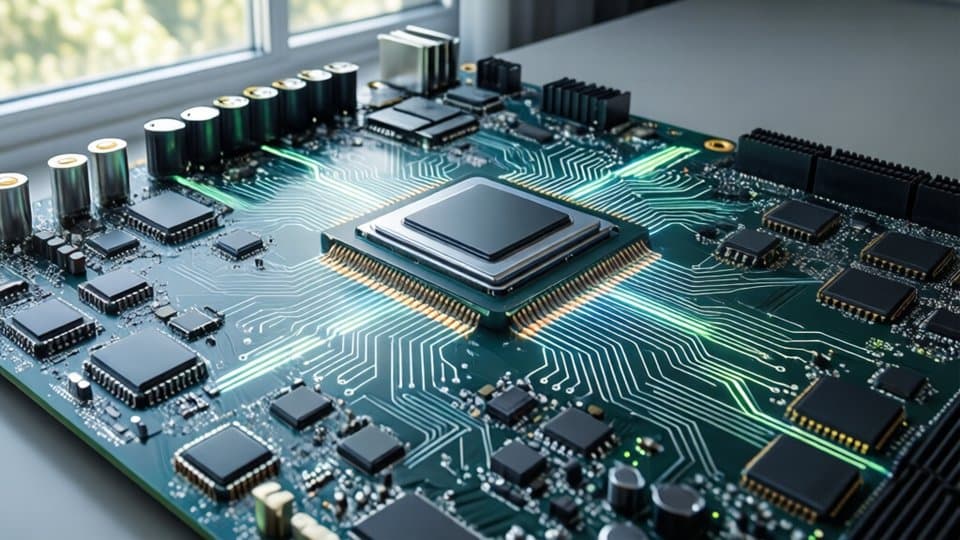
OpenAI announced on November 18, 2025, that its AI models have achieved up to 14% improvements in the power, performance, and area of AMD's flagship GPU designs. This breakthrough allows chip designers to compress roughly one year of optimization work into less than five months. Engineers at AMD have already incorporated some of these AI-suggested changes into chips recently sent for manufacturing.
- OpenAI reported up to 14% gains in PPA for AMD flagship GPUs, according to The Next Web.
- AMD confirmed single-digit percentage improvements for its next-generation flagship CPU, per Kucoin.
- OpenAI's co-founder Greg Brockman claims the AI helped AMD finish a year of work in five months, according to Crypto Briefing.
What exactly happened with the chip designs?
OpenAI used its advanced language models to rewrite the SystemVerilog RTL code, which is the text-based blueprint that describes a chip's electrical circuits. By rewriting this code, the AI found more efficient ways to organize the hardware. The models then used professional software from Synopsys to verify that these new circuit layouts actually worked correctly.
The improvements focus on what engineers call PPA. This stands for power, performance, and area, which serves as a report card for how efficient a chip is. A better PPA score means a chip can run faster, use less electricity, or take up less physical space on a silicon wafer. OpenAI applied these techniques to AMD's highly optimized existing designs, which are usually very difficult to improve further.
The results were substantial. OpenAI stated that the models achieved up to a 14% PPA improvement on AMD's flagship GPU IP. While OpenAI provided these specific figures, Note.com points out that AMD has not yet released a public breakdown of these specific numbers. However, AMD's official social media account acknowledged the news by posting the phrase "Faster Together."
Why does this matter for the future of AI?
This development marks a shift where AI is now being used to design the very hardware that runs it. Currently, massive data centers require thousands of GPUs to process AI workloads. Even a tiny increase in efficiency can lead to massive savings in electricity and computing power across a global infrastructure. This creates a cycle where smarter AI designs more efficient chips, which then run even more powerful AI.
The speed of development is also a major factor. According to Crypto Briefing, Greg Brockman stated that the models helped AMD compress a year of design progress into just five months. This acceleration could allow hardware companies to bring new products to market much faster than previous industry standards allowed.
The partnership between OpenAI and AMD is also deeply financial. OpenAI has secured warrants for up to 160 million AMD shares, which could represent a nearly 10% ownership stake in the chipmaker. This stake is tied to specific milestones, meaning OpenAI's financial success is directly linked to how well AMD's hardware performs in the real world.
Who is affected by these AI design changes?
Semiconductor manufacturers and hardware engineers are the primary groups feeling this impact. The ability to use AI to automate the tedious parts of circuit rewriting allows human engineers to focus on higher-level architecture. Companies like Synopsys, which provides the essential design software, are also deeply involved as they work with OpenAI to integrate AI directly into professional tools.
Large-scale data center operators will eventually benefit from these optimizations. Because the AI-suggested changes for OpenAI's own "Jalapeño" chip were validated on actual silicon, the efficiency gains are not just theoretical. For example, Kucoin reports that the AI reduced the area of the Jalapeño vector compute unit by about 13% and the matrix compute unit by about 10%.
Startups in the chip design space are also reacting to this trend. As noted by The Next Web, firms like Architect Labs have already raised millions of dollars to help companies use AI for custom chip design. This suggests that the ability to design hardware with AI is becoming a standard requirement for staying competitive.
What can you do to follow these developments?
While individual consumers cannot directly use these chip design tools, you can monitor the hardware you buy to see the results. The optimizations made by OpenAI and AMD are intended for high-end products. You can track the release of new AMD Instinct GPUs or next-generation CPUs to see if the promised efficiency gains translate to better performance in consumer and enterprise devices.
If you work in the tech industry, you should watch for the release of "GPT-Synopsys." This is a specialized model being trained to use professional electronic design automation (EDA) tools. Monitoring the rollout of these tools will provide a better idea of how quickly AI moves from experimental research into standard engineering workflows.
Keep an eye on the following milestones:
- The deployment of 1 gigawatt of MI450 series GPUs, which is expected in the second half of 2026.
- The arrival of additional compute capacity from TensorWave, expected in the first half of 2027.
- Official confirmation from AMD regarding the specific performance metrics of their next-generation flagship CPUs.
What happens next in AI chip design?
The next phase involves moving from optimizing existing designs to creating entirely new ones from scratch. OpenAI tested its models by asking them to design RISC-V processors based only on written specifications. While the models scored well, OpenAI noted a caveat: when designing from scratch, models might omit certain features like performance counters to maximize their scores.
To make the AI more reliable, OpenAI's own chip chief, Richard Ho, has expressed a need for caution. The Next Web reports that Ho stated last month that he "still does not fully trust AI design changes," meaning every change must still undergo rigorous human and software verification.
The industry is moving toward "full-stack co-design." This means companies like OpenAI will not just buy chips, but will actually share their specific workload data with manufacturers like AMD. This data helps AMD build hardware that is tailor-made for the specific way AI models think and process information, creating a more seamless link between software and silicon.
Frequently Asked Questions
What is PPA in chip design?
PPA stands for Power, Performance, and Area. It is a metric used to measure how efficiently a chip uses energy, how fast it processes data, and how much physical space it occupies.
Is the AI actually designing the chips?
The AI currently assists by rewriting the code that describes the circuits. While it can design from scratch in tests, human engineers still use verification tools to ensure the designs are correct and reliable.
Will this make chips cheaper?
By reducing the physical area required for certain components, AI can potentially make chips more efficient to manufacture. This could eventually lead to better value in high-performance computing hardware.
SEO Meta Description: OpenAI reveals its AI models improved AMD GPU designs by up to 14% in PPA. Learn how AI is accelerating chip design and what it means for the future of hardware.
URL Slug: openai-amd-ai-chip-design-improvement
Sources
- 1.thenextweb.comOpenAI says its AI found 14% gains in AMD’s flagship GPU design
- 2.kucoin.comOpenAI Advances Chip Design with AI Models, Achieving 14% PPA Improvement for AMD GPU
- 3.note.comOpenAI's AI improves GPU designs refined by AMD for years by up to 14%. AI has started designing the chips it runs on
- 4.cryptobriefing.comOpenAI says its models helped AMD compress a year of chip design into five months